How to Choose the Right City for Your GCC in India
 05 Nov
Key Takeaways
- Pick your GCC city by the first 50 roles you need to fill. City rankings come second.
- Every Indian metro has a specialty, and inside each city a few micro-markets hold most of the GCC talent.
- Tier 2 cities make excellent second sites once your leadership team is settled in a metro.
Every global capability centre in India started as a pin on a map.
Somewhere in a boardroom in Chicago, Frankfurt or Tokyo, a leadership team looked at one country, a dozen possible cities, and placed a bet. That pin decided who they would hire and how far their India team would travel, from a delivery unit to the place where the company's biggest ideas now get built.
With more than 2,100 GCCs operating across India, the bet is no longer about India itself. It's about a specific city, and often a specific neighborhood within it.
GCC Hubs in India: What Each City Does Best
Bengaluru is the first call for product engineering, AI and platform teams. Industry reports place it as the country's largest GCC market. Outer Ring Road, Whitefield and Manyata are where most centres cluster.
Hyderabad is built for scale. It has drawn more GCCs than almost any city in recent years, with tech, BFSI and life sciences leading the way. HITEC City, Gachibowli, and the Financial District carry most of that growth.
Pune leans towards engineering. Automotive, manufacturing and BFSI centres spread across Hinjewadi, Kharadi and Yerwada, and teams here tend to stay longer. That matters when you're building knowledge that lives in people.
Chennai is strong in engineering R&D, SaaS, and banking operations. Most of the action runs along OMR.
Delhi NCR is really two markets. Gurugram suits consulting, analytics and leadership-heavy teams that travel often, with the international airport close by. Noida works well for larger tech teams looking for room to grow.
Mumbai is the natural base for banking, capital markets and insurance GCCs. BKC and Powai lead, while Thane and Navi Mumbai are growing quickly.
One tip if two cities fit your roles equally well: pick the one where your HQ leaders will happily spend a week. They'll be visiting often.
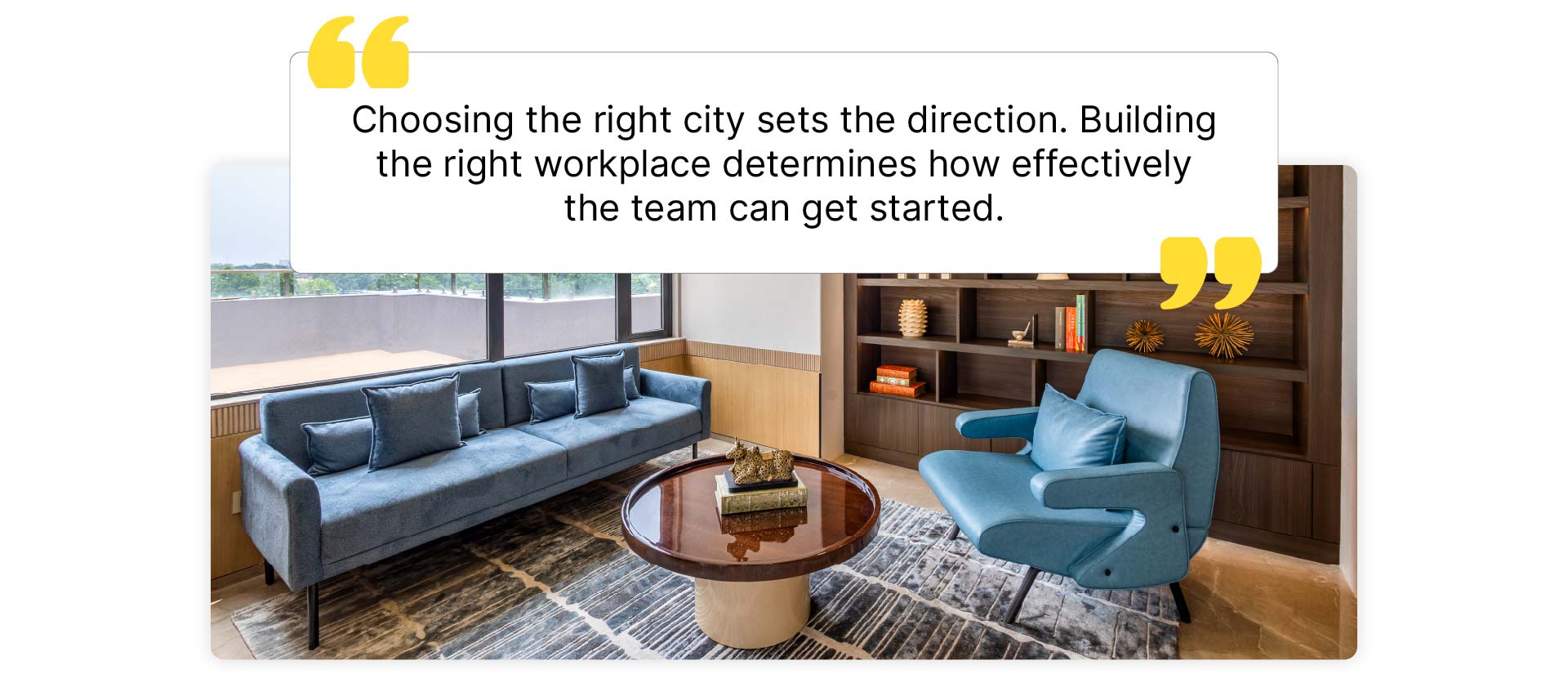
Four Questions to Ask on Your GCC City Visit
- How long is the morning commute? Drive it yourself, from the neighbourhoods your hires live in.
- Who are our neighbors? Sitting near other GCCs makes senior hiring easier.
- How soon can our first team move in? A ready workspace lets hiring and onboarding start together.
- What does the state offer? Several states run GCC policies with incentives. Ask early so they're part of your plan from day one.
When a Tier 2 City Makes Sense for Your GCC
Ahmedabad, Coimbatore, Kochi, Jaipur and Indore show up on shortlists every quarter. Industry reports suggest emerging cities already host over 220 GCC units.
Our take is simple. Tier 2 cities are excellent second sites. They suit a defined function, a stable process, and a team lead who already knows how your GCC works. Build leadership in a metro first, then open in a Tier 2 city once the operating rhythm is in place.
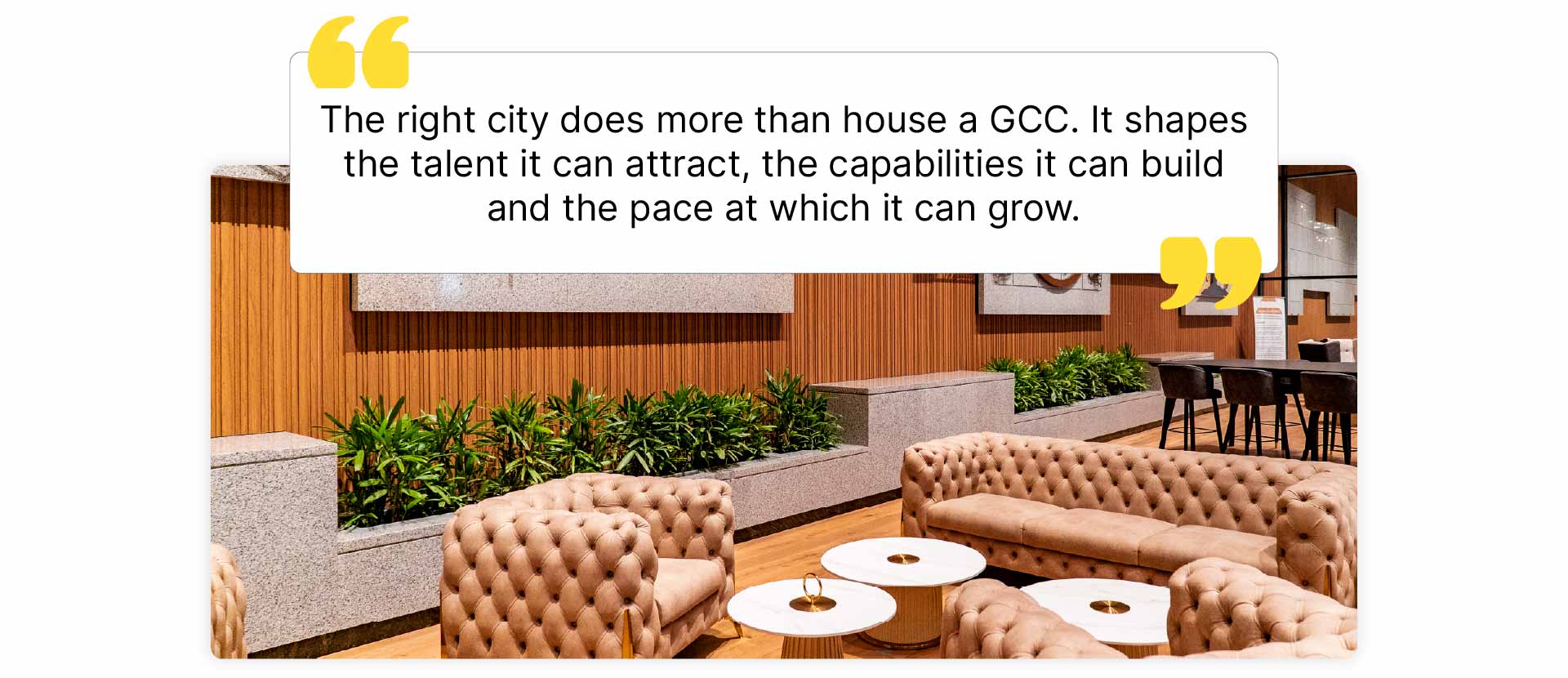
Setting Up Your GCC Office with Smartworks
With your city chosen, the next priority is getting your team into a workplace built for the way your GCC operates.
Smartworks delivers custom managed offices across India's leading business hubs, designed around your brand, operational requirements and security standards. With handovers in 45 to 60 days, your team can get started sooner, while the workspace scales with every new hire, function and business milestone.
As you expand into more cities, you have a consistent workplace partner to bring the same standards, experience and operational support to every location.
Frequently Asked Questions
It depends on the roles you need. Bengaluru leads for product and AI teams, Hyderabad for large multi-function centres, Pune and Chennai for engineering, and Mumbai and Delhi NCR for financial services and consulting. Match the city to your first-year hiring plan.
India has more than 2,100 global capability centres as of FY26, according to industry reports. Together they run over 3,700 units and employ more than 2.3 million people.
A Tier 2 city works best as a second site. Most GCCs build their leadership team in a metro first, then open in cities like Ahmedabad, Coimbatore or Kochi for specific functions once processes are stable.
With a managed office partner like Smartworks, a GCC can move into a custom workspace in 45 to 60 days. That lets hiring and onboarding begin together, so the centre gets productive sooner.
HITEC City, Gachibowli and the Financial District hold most of Hyderabad's GCCs. Grade A office supply, metro access and a large tech workforce living nearby make these areas the first choice for new centres.