What is a Managed Workspace? A Guide for CXOs
 14 Jul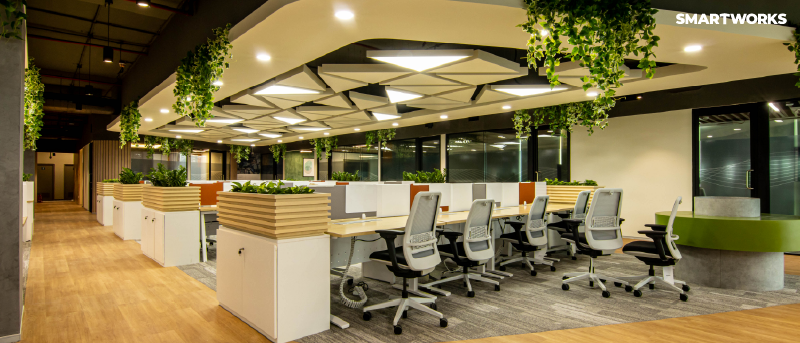
Key Takeaways
✓ A managed workspace is a fully built, single-tenant office designed, delivered, and operated by one provider under a single commercial agreement.
✓ Flex operators (the category managed offices sit within) leased out close to 18 million square feet across India in 2025, their strongest year on record.
✓ For CXOs, the decision is no longer a facilities matter. It carries direct consequences for capital allocation, speed to market, and workforce experience.
The best workplaces don't just support a business; they grow with it.
Leaders today ask bigger questions when it comes to office space discussions: How quickly will we scale? How do we create better employee experiences? How do we avoid locking ourselves into decisions that may not work a few years from now?
The managed office model has an answer for each of these.
What is a Managed Workspace?
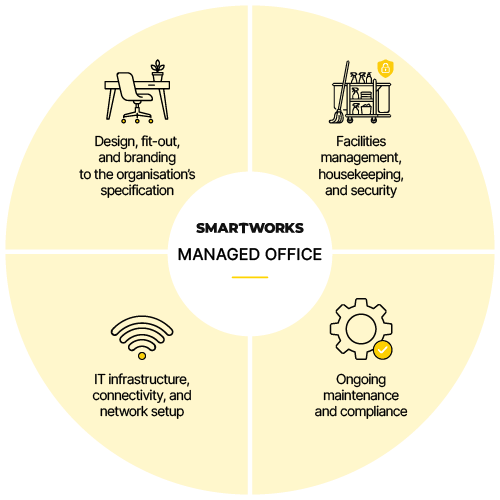
A managed workspace is an office built and operated exclusively for one organization, under one commercial agreement, by a single provider. The provider designs the space, delivers the fit-out, and then runs the office end-to-end - from facilities management to technology infrastructure, in exchange for one predictable fee. The organization gets a fully built environment shaped around its own teams and brand, without carrying the operational weight of running it.
Why the Model Is Gaining Ground in India
Flex was the single largest occupier segment in the final quarter of 2025, its highest-ever share of leasing activity in a single quarter. That is not a small trend anymore. That is a market telling you where it is headed.
India's GCCs have outgrown the "support function" label. They're where global companies are now building real strategic capability, and that's expected to make GCCs one of the strongest drivers of leasing demand through 2026.
That is exactly where managed formats earn their place. They shrink the distance between a leadership team deciding to expand and a team actually sitting down to work, which, for most CXOs, is the only timeline that really matters.
The Leadership Case for a Managed Workspace
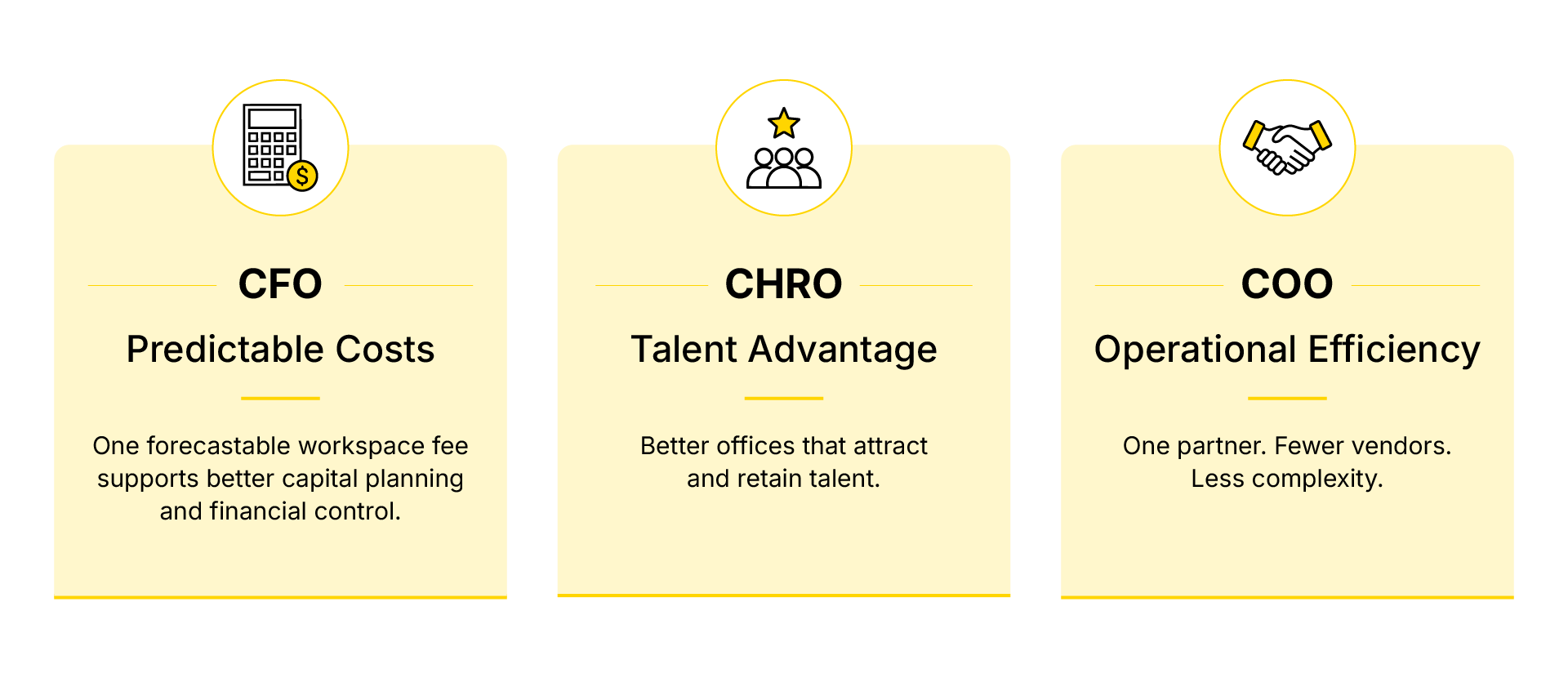
For the CFO, the appeal is predictability. Workspace costs are consolidated into a single, forecastable fee, which can support better capital planning across the business.
For the CHRO, the office has become part of hiring and talent retention conversation. A managed workspace gives teams access to enterprise-ready offices with amenities already in place, without requiring an internal team to build and run them.
For the COO, the case is about vendor consolidation. Replacing a roster of separate contracts with one accountable partner returns operational bandwidth to the business rather than the building.
Who the Managed Model Suits
Enterprises expanding across cities - Organizations evaluating managed office space in India across multiple markets gain consistency: the same design, technology, and service standard in every city, through a single partner, instead of a fresh vendor search each time they enter a new market.
Global Capability Centres - For global firms setting up or scaling GCCs in India, a managed office removes much of the complexity of local market entry. The provider manages delivery and daily operations, while the parent organization gets a workspace consistent with its standards from day one.
High-growth companies - Businesses that have outgrown their first office but are not yet at the scale of a full corporate real estate function sit in a gap that managed workspaces are well-suited to close.
How to Choose a Managed Workspace Partner
Start with scale - Does this provider operate at the size your expansion will demand two years from now, or only at the size of your current requirement? A scalable footprint is what you’re looking for.
Ask about delivery - Look for a provider who can point to offices built at a comparable size to yours and comes with a strong track record that is easy to verify.
Finally, walk the space - Connectivity, access systems, the amenities your teams will use on an ordinary Tuesday - these tell you more about a provider than anything in an official proposal.
Where Smartworks Fits In
Smartworks is one of India's leading managed office platforms - designing, building, and running custom workspaces for enterprises, GCCs, and fast-growing companies across the country's major business hubs and in Singapore.
The campuses delivered are built at scale from the outset, which means the amenities, technology, and service standards a team gets in Bengaluru are the same ones waiting for them in Pune or Gurugram. The model behind it “Design, Build, Manage” comes down to one idea: one partner, accountable from the first requirement to the day the office is ready to work in.
Ultimately, a workplace should support business growth with certainty, speed, and consistency. That is the outcome Smartworks is designed to deliver.
Frequently Asked Questions
When the full scope of a conventional lease is considered, including fit-out, deposits, and ongoing facilities contracts, a consolidated fee offered by managed office providers is often the more transparent and economical option.
A serviced space is shared, with a limited scope for customization. A managed workspace is exclusive to one organization: its own layout, its own branding, and its own infrastructure, delivered under a single agreement.
Yes. Providers with a pan-India footprint can replicate design, technology, and service standards across markets, which removes the need for a separate lease negotiation and fit-out project in every new city.
Generally, yes. Agreements are structured to allow additional seats, floors, or locations as an organization grows, rather than fixing terms to a single long-term assumption about headcount.